

How PSEG Helped Build Modern New Jersey
By Paul Toscarelli, VP of Electric Operations at PSE&G On Jul 6, 2026As the United States celebrates the 250th anniversary of the Declaration of Independence, Americans are rediscovering the nation’s history. Teachers are developing special lesson plans to explore our country’s defining moments. Museums are unveiling new exhibits and artifacts.
And it doesn’t stop there. Americans are learning that history isn’t only found in classrooms, museums, and books. It’s all around them. Sometimes it’s as close as the light switch on the wall.
Here in New Jersey, the history of our electrical company, PSEG, in many ways mirrors the story of our nation. It’s a story of innovation, grit, overcoming obstacles, and caring for neighbors.
Did you know?
In 1903, just a few months before the Wright Brothers took their historic flight, PSEG began operations as Public Service Corporation of New Jersey, when businessman Thomas McCarter and partners consolidated more than 400 gas, electric, and trolley companies into a single holding company. Turning a fragmented set of local providers into a statewide backbone made it possible to improve reliability and finance large-scale infrastructure while maintaining cost effectiveness.
PSEG quickly became a catalyst for growth. It built modern power plants that provided factories with reliable electricity and helped make New Jersey an economic powerhouse. Its huge trolley network carried hundreds of millions of riders each year. That combination of dependable power and transit supported industrial districts and downtown commercial centers and made possible the spread of residential neighborhoods beyond traditional city cores.
During the years before World War II, PSEG continued innovating. In 1926, as the country roared through one of its most electric decades, Thomas Edison cut the ribbon at the company’s Kearny Generating Station. The largest power plant in New Jersey, the station became a flagship of the state’s increasingly modern electric grid.
Then in 1937, during the depths of the Great Depression, PSEG engineers co-developed the world’s first fleet of diesel-electric buses, a technology that would reshape American transportation. Those buses helped keep New Jersey’s cities moving at a time of deep economic pain, giving workers and shoppers a faster alternative to streetcars.
This commitment to remaining on the cutting-edge prepared the company for the momentous years to come. During World War II, PSEG was the backbone of New Jersey’s war economy. Its generating stations supplied electricity to the shipyards, munitions plants, refineries, and steel and chemical works that turned New Jersey into one of the nation’s leading defense manufacturing centers. At the same time, its electric streetcars and bus lines moved workers each day to factories and naval facilities along the Hudson and in New Jersey’s cities, so plants could run multiple shifts without interruption.
Post-War Boom
In the postwar decades, PSEG powered New Jersey’s boom, shifting from a transit-focused company to a modern electric and gas utility that wired new suburbs, shopping centers, and industrial parks. The company built large fossil (and later nuclear) plants to keep up with soaring energy demand, creating the infrastructure supporting postwar prosperity as the state grew more suburban.
And when there were problems, the company acted decisively. During the 2003 Northeast Blackout, of the 750,000 customers that lost power that day, nearly three-quarters were back online within five hours and virtually all had service by noon the next day. In 2012, PSEG led one of the largest utility restoration efforts in American history after Superstorm Sandy tore through the state. Afterwards, workers raised and rebuilt substations, installed smart grid technologies, and replaced vulnerable gas infrastructure. Over the decade that followed, more than 1,500 smart switching devices were deployed across the system, allowing operators to reroute power automatically around damaged equipment. The result: outages have been cut by about 22%.
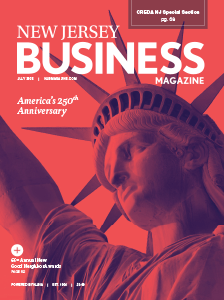
It’s been an eventful 123 years. And counting. Today, this once humble trolley company supplies power to 2.4 million electric and 1.9 million gas customers, including one of America’s most enduring symbols of freedom — the Statue of Liberty.
As the nation celebrates its 250th anniversary, PSEG is committed to renewing its legacy of excellence, which has helped underpin New Jersey’s — and America’s — success. That legacy is summed up nicely by one of the company’s longest-serving employees, Don Weyant, manager of regulatory compliance:
“On my very first day in Bergen Division,” Weyant said recently, “I was told our most important job was to keep the lights on and, if they go out, restore them as quickly and as safely as possible. That principle continues to guide this company. Over nearly seven decades, I’ve watched PSE&G continue to adapt to better serve our customers through new technology, safer ways of working and a stronger, more resilient infrastructure. But through all that change, the values that have always defined this company have remained the same. Service is the second word in our name, and I’ve always been proud to be part of an organization whose reputation, ethics, and commitment to both its customers and its employees have endured through every generation.”
To access more business news, visit NJB News Now
Related Articles: