

HCCC AI Strategy and Governance Council Puts College at Forefront of Technological Advances
On Jun 16, 2026Artificial Intelligence (AI) is reshaping how we learn, work and live. Hudson County Community College (HCCC) is addressing the advantages and challenges posed by this rapidly evolving and transformative technology through the formation of the HCCC Artificial Intelligence Strategy and Governance Council (AISGC).
Established in Fall 2025, AISGC is charged with aligning academic, technological, and administrative leadership; preparing students for an AI-enabled workforce through AI literacy, curricula integration, and access to emerging technologies; and guiding responsible AI adoption across teaching, learning, and operations.
“We’re scratching the surface of what humans can do with AI,” said HCCC Interim President Dr. Lisa Dougherty. “Forming the AISGC was a first step in aligning AI with our mission and strategic plan. The College is committed to ensuring students, faculty, and staff learn to engage AI ethically and effectively, respecting human dignity, protecting privacy, preventing bias, and empowering the community.”
HCCC’s AISGC is a cross-functional leadership body headed by HCCC Associate Vice President for Information Technology and Chief Information Officer Patricia M. Clay and Associate Vice President for Digital Learning, AI and Emerging Technologies Matthew LaBrake that brings together faculty, staff, administrators, and students. AISGC helps ensure that AI-related decisions reflect broad institutional perspectives and community input. It serves as the College’s central forum for evaluating AI technologies, aligning institutional priorities, and guiding responsible adoption across the College.
HCCC AISGC provides the framework through which the College adopts, governs, and invests in AI. Current priorities include:
- Responsible AI Guiding Principles serve as a “North Star” for decision-making related to policy development, technology adoption, staffing, curriculum integration, and AI literacy. The flexible, values-based foundation is designed to evolve alongside the rapidly changing AI landscape. The principles emphasize student success, ethical innovation, human accountability, transparency, academic integrity, privacy, fairness, security, and legal compliance. Practical examples for each principle help connect institutional values to everyday practice.
- HCCC’s Coordinated Institutional Approach to AI helps ensure implementation is collaborative, transparent, and aligned with the College’s mission and values. The College engages stakeholders through working groups, Town Halls, and feedback opportunities to support community-informed decision making.
HCCC is moving from strategy to practical implementation by reviewing institutional policies, supporting AI literacy development, vetting AI tools for privacy and accessibility, and defining evaluation measures to guide responsible adoption.
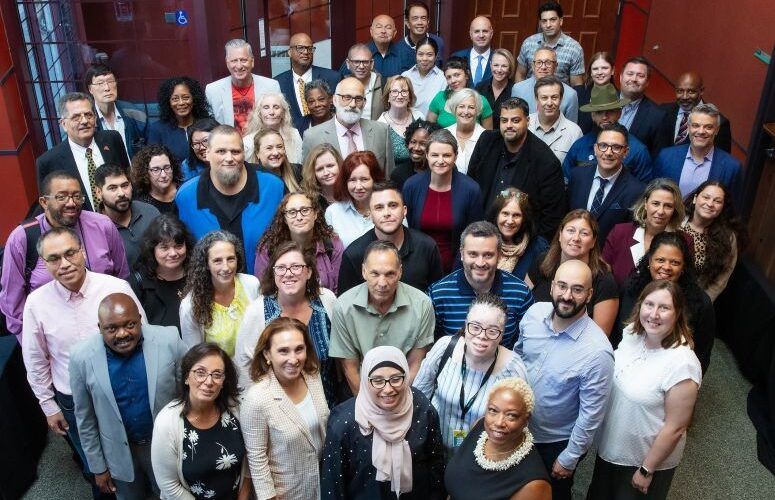
- HCCC builds AI Literacy across the College Community by utilizing professional development opportunities that include collaborative learning communities, workshops, guest speakers, and external credential programs. In April 2026, the College hosted a full-day AI learning event that brought together nearly 100 HCCC faculty and staff.
- HCCC’s AI Spark Grants support faculty innovation by providing funding for instructors to redesign assignments and activities that integrate AI in discipline-specific ways. The inaugural cohort’s Spring 2026 projects explored strengthening AI literacy, critical thinking, authentic assessment, and responsible AI use within learning environments. The group will share the outcomes of their projects in a Fall 2026 showcase, creating a cycle of experimentation, reflection, and scaling to encourage evidence-based refinement of AI-integrated practices.
HCCC’s AISGC will continue to build on its foundational framework by expanding working groups, refining guidelines, evaluating technologies, and recommending organizational structures to sustain AI throughout the College, and to ensure AI integration remains ethical, effective and aligned with the College’s priorities and workforce expectations.
To access more business news, visit NJB News Now.
Related Articles: